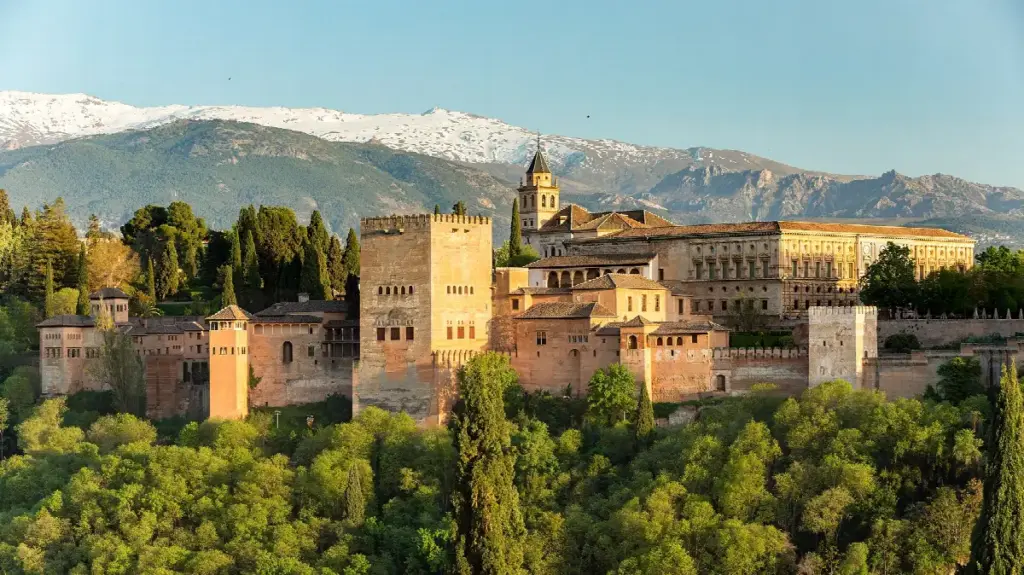
Granada is built on hills, and that is why the city is full of viewpoints. You climb four steps in the Albaicín, turn your head, and there it is: the Alhambra straight ahead, Sierra Nevada behind it and rooftops tumbling down towards the river. San Nicolás is the famous one, the one in every photo, and the one that fills up completely at sunset. But there are many more, some of them five minutes away, with the same view and nobody in them.
Here are all of them: the Albaicín ones, the ones on the Alhambra side, the Sacromonte ones and the ones almost nobody visits. With the best time of day for each, because Granada changes a lot between morning and evening.
Notice as of 15 September 2026: after the August earthquakes, the Alcazaba (including the Torre de la Vela) and the Comares Tower are still closed to the public. The rest of the Alhambra is open and ticket prices are unchanged. Before you go, check the Patronato notices or call +34 958 027 971. Full details in Alhambra tickets.
Mirador de San Nicolás: the postcard of Granada
It sits at the top of the Albaicín, on the small square next to the church of San Nicolás, and it has the most complete view in the city: the whole Alhambra facing you, stretched along its hill, with Sierra Nevada behind. From November to April, with snow on the mountains, it is one of those things that stay with you.
It is also by far the busiest. From about an hour before sunset the railing is taken and people sit on the ground, on the benches and on the steps. There is usually someone playing guitar.
Two things I would do:
- For a quiet visit, go mid-morning. There will be four people up there and the sun hits the red walls straight on.
- If you go at sunset, arrive early and, above all, do not leave when the sun goes down. Almost everyone does, and they miss the best part: about twenty minutes later the Alhambra floodlights come on and it glows gold against a deep blue sky.
When it is packed, keep an eye on your bag and your phone, as you would anywhere with a tight crowd.
Mirador de San Cristóbal: the same view with the city wall in front
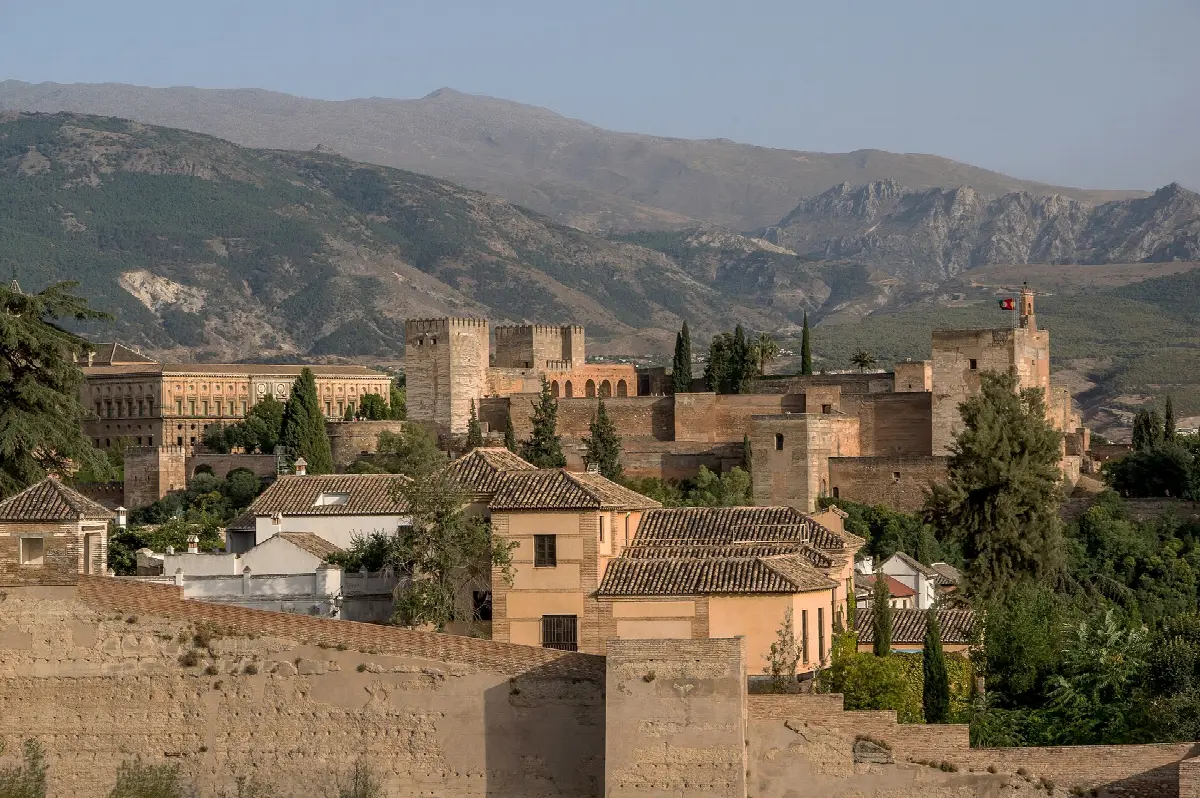
A little higher up, on the Carretera de Murcia. From here you see the whole Albaicín spread out below you, with a stretch of the 11th-century Zirid wall in the foreground and the Alhambra further away, with the entire city in between. A different photo and, to me, a better composed one.
The big advantage: there is room. You rarely find it crowded. And you can get to the door by bus or car, so it is the viewpoint to pick if you are travelling with someone who cannot manage steep streets.
San Miguel Alto: the highest one, and the one you have to earn
Next to the hermitage of San Miguel Alto, at the very top of the Albaicín. From up there you see absolutely everything: the Alhambra, the Sacromonte, the whole city and the vega opening out towards the horizon. It is the widest view in Granada.
Now the small print: you have to walk up, and the climb is real. From Plaza Larga it is about twenty minutes of serious uphill along the Camino de la Ermita. Worth it, but bring proper shoes and water.
It is the classic spot for sunrise over the mountains. One warning: parts of the way down are very poorly lit and empty at night, so head back before it gets fully dark, or with company.
La Lona and Ojo de Granada: the city locals actually look at
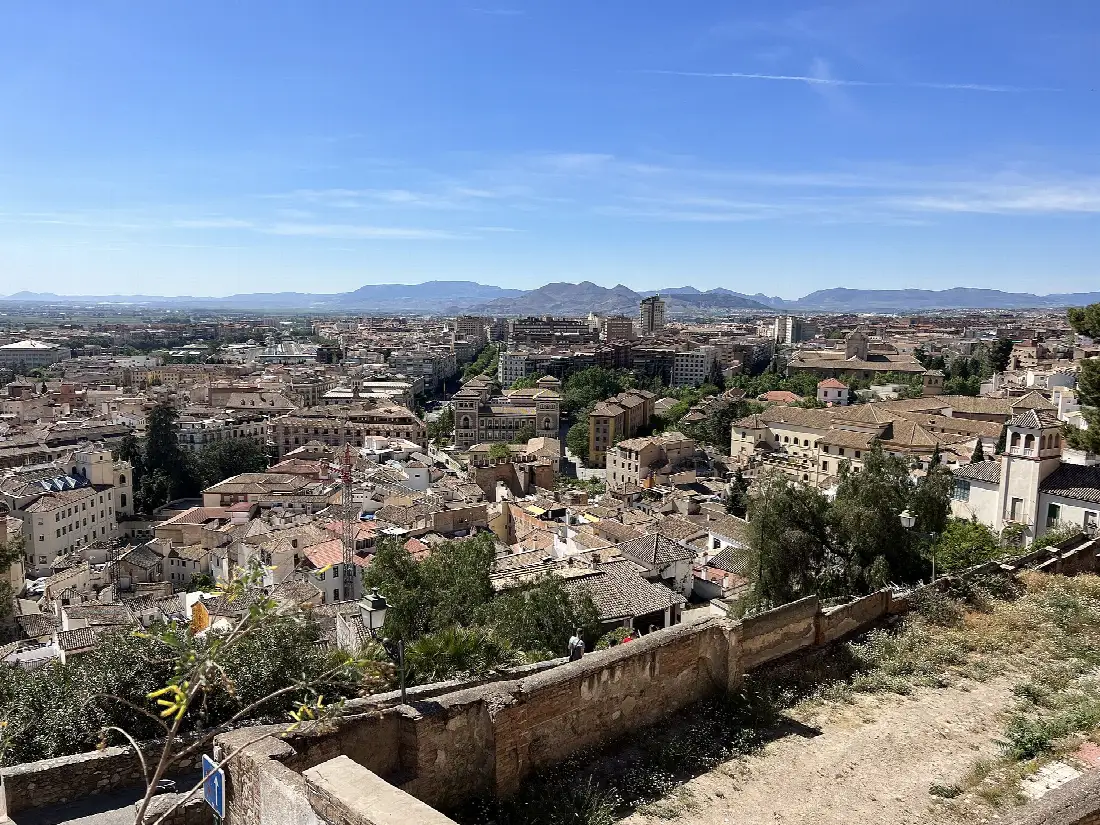
These two sit side by side around Carril de la Lona, on the western slope of the Albaicín, and they offer something different. You do not get the Alhambra head on here. You get the Granada that locals see: the rooftops of the centre, church towers, the vega in the distance and the sierra on the other side.
Hardly any visitors make it up. Most afternoons it is you and a neighbour walking the dog. La Lona faces the city; Ojo de Granada is a few metres away, on Calle Cruz de Quirós.
The small viewpoints of the Albaicín
The neighbourhood is full of little squares with a view where ten people fit and that is that. These are the ones worth hunting down:
- Mirador de la Placeta de los Carvajales. On Cuesta de Carvajales, in the lower Albaicín, very close to Carrera del Darro. The Alhambra sits right in front and barely anyone fits, so first thing in the morning you get it to yourself.
- Mirador de la Cruz de la Rauda. Up in the high Albaicín, on the way to San Miguel. The kind you find without looking for it.
- Mirador de la Churra. Around the Almanzora area, genuinely hidden. If you like wandering without a map, this is your reward.
- Placeta de San Miguel Bajo. Not a viewpoint as such, but it opens on one side towards the vega, has chestnut trees for shade and terraces to sit at. One of my favourite places in the neighbourhood for doing nothing at all.
The viewpoints on the Alhambra side
The other hill has its own, and almost nobody uses them because everyone is busy looking towards the Alhambra instead of looking from it.
Carmen de los Mártires
Large gardens right next to the Alhambra, with ponds, peacocks, palm trees and a terrace looking over the city. They belong to the city council and entry is free. Watch the opening hours: on weekdays they close at midday and reopen in the afternoon, while at weekends and on public holidays they stay open all day.
It is one of the calmest places in Granada, which is remarkable given it is two minutes from where all the crowds are. In spring it is spectacular.
La Silla del Moro
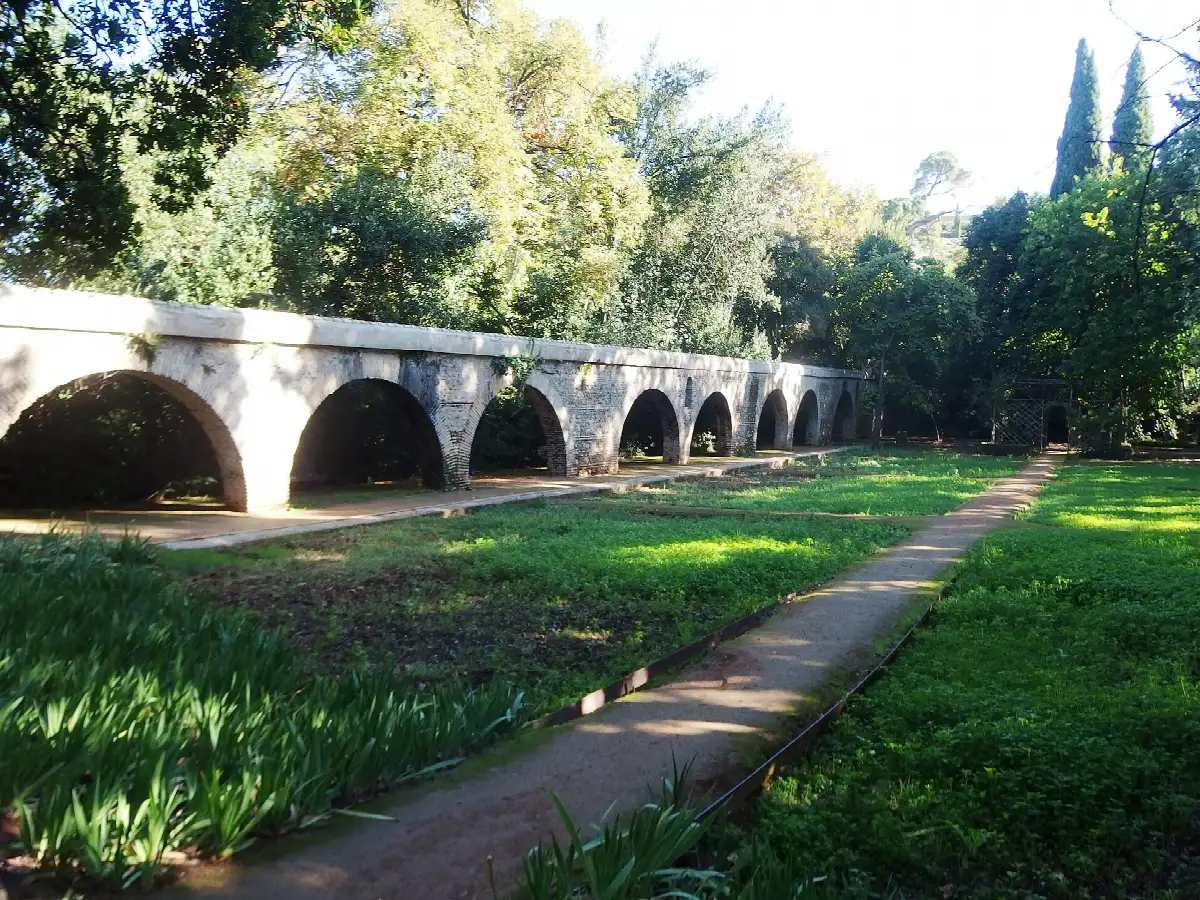
The little fort you can see right at the top, above the Generalife. Its official name is Castillo de Santa Elena, though nobody here calls it that. You walk up along the Camino de la Silla del Moro and access is free, no ticket and no booking.
From there you see the Alhambra from above, with the palace roofs and the Generalife gardens below you and the whole of Granada behind. It is one of the least known views in the city and one of my favourites.
Barranco del Abogado and Mirador de los Alixares
The neighbourhood that drops away below the Alhambra to the south. It has a couple of viewpoints over the vega and the mountains, almost always empty, around Avenida de Santa María de la Alhambra. If you are staying nearby or walking down from the Mártires gardens, take a look.
The Alhambra Palace terrace
The 1910 hotel on the way up to the Alhambra has a terrace hanging over the city. It is not a public viewpoint: you go in for a drink. But if you fancy watching Granada at sunset sitting down with a glass in your hand, that is the one. There is more on the area in the guide to where to stay in Granada.
The Sacromonte viewpoints
Walking up Camino del Sacromonte, between caves and prickly pears, you see the Alhambra from an angle you get nowhere else: side on, with the Darro ravine in between.
- Mirador Mario Maya, on Verea de Enmedio. Named after the flamenco dancer Mario Maya, who grew up dancing in the caves of this neighbourhood. One of the best sunsets in Granada.
- El Peso de la Harina, higher up Camino del Sacromonte. A long view of the valley and the Alhambra.
- Mirador de la Abadía, next to the Abbey of Sacromonte at the end of the road. You are properly out of the city here, and it shows: complete silence.
If you want to end the night with flamenco, read up on the flamenco tablaos in Granada before booking anything.
From below: Paseo de los Tristes
It is not a viewpoint, it is a promenade along the river Darro (its real name is Paseo del Padre Manjón), but the view earns it a place on this list. Here you do not look at the Alhambra straight on: it is above you, rising over the ravine, with the towers appearing through the trees.
At night, floodlit, it is probably the most beautiful sight in Granada. And there are terraces to sit at. It is the perfect end to a walk along Carrera del Darro, which is part of the Albaicín route.
The viewpoints inside the Alhambra
And if you already have your Alhambra ticket, there are three views inside the complex that people walk past because they are in a hurry:
- The Torre de la Vela, in the Alcazaba. You climb it and get the full 360 degrees: Albaicín, Sacromonte, the city, the vega and the mountains.
- The Mirador de Daraxa, in the Nasrid Palaces, with its lattice windows looking onto the garden.
- The Mirador Romántico, in the upper part of the Generalife.
All three are on the standard route, so no special ticket is needed. You just have to remember to look up. Here is the detail on what to see in the Alhambra.
What time to go to each viewpoint
This is the part almost nobody plans, and the one that changes the experience most:
- Sunrise: San Miguel Alto. The light comes up from behind the mountains and hits the Alhambra full on.
- Mid-morning: San Nicolás and Carvajales. Empty, and the best light for photos because the sun is facing the walls.
- Midday: Carmen de los Mártires or Silla del Moro. There is shade and no crush.
- Sunset: San Cristóbal, Mario Maya or La Lona if you want the sunset without the crowd. San Nicolás if you do not mind people and you want the postcard.
- After dark: Paseo de los Tristes, with the Alhambra lit up. And if you still have time, the Alhambra night visit is another plan few people know about.
A route to link several in one afternoon
If you have half an afternoon and want to see them without wrestling with a map, this order works because the climbing comes first and the walking down comes last:
- Take the C31 or C32 minibus from Plaza Nueva up to the top of the Albaicín.
- Mirador de San Cristóbal, to start gently with the wide view.
- Walk down to Plaza Larga and have something. From there, if your legs allow, climb up to San Miguel Alto.
- Mirador de San Nicolás for sunset. Arrive early.
- Come down through Placeta de San Miguel Bajo and the Mirador de la Lona in the last light.
- Finish down at the Paseo de los Tristes with the Alhambra already lit, and have dinner there. There are places in the guide to where to have dinner in Granada.
That is about four hours with stops. If you are short on time, see how it fits into the Granada in two days itinerary.
How to get up there (and why not by car)
The minibuses are the best way to get to the top without destroying your legs. Nearly all of them leave from Plaza Nueva:
- C31: goes up into the Albaicín. This is the one that drops you near San Nicolás.
- C32: covers both the Alhambra and the Albaicín, so it links the two hills.
- C34: goes up Camino del Sacromonte as far as the Abbey.
- C30: the Alhambra line.
By car, don’t. The Albaicín streets are extremely narrow, much of the area is a restricted traffic zone and parking up there is a lottery you rarely win. The fine for driving into the restricted zone arrives at your home address on its own.
My favourite way: bus up, walk down. Going downhill you enjoy the neighbourhood in a completely different way and you keep stumbling on little squares you were not looking for.
Four things worth knowing before you go up
- Shoes. The Albaicín cobbles are slippery and the hills are no joke. Leave the smooth-soled sandals at the hotel.
- Water and shade in summer. From June to September, do not climb to San Miguel Alto between 1pm and 6pm. There is no shade the whole way.
- These are lived-in neighbourhoods. People have homes in the Albaicín. At sunset there is music and noise at San Nicolás; in the squares around it, there is not. Keep your voice down on the way down.
- The viewpoints are free. All of them. If someone charges you to enter one, it is not a viewpoint.
To fit all this into your trip, there is the guide to Granada’s neighbourhoods and the one on what to see in Granada. And if you would rather have someone explain it on the spot, some Albaicín free walking tours stop at several of these viewpoints.
Frequently asked questions
What is the best viewpoint in Granada?
San Nicolás has the most famous view, with the Alhambra facing you and Sierra Nevada behind. For the same scene with fewer people, go to San Cristóbal. And for the widest view over the whole city, climb up to San Miguel Alto.
Where is the best place to see the Alhambra from?
Head on and complete, from the Mirador de San Nicolás. From below, rising above you, from the Paseo de los Tristes. And from above, with the palace roofs at your feet, from the Silla del Moro.
What time should you go to Granada’s viewpoints?
Sunset is the headline moment, but also the busiest. Mid-morning the viewpoints are empty and the light hits the Alhambra straight on, which is when photos come out best. And if you do go at sunset, stay twenty minutes longer: the floodlights coming on is the part that really pays off.
Are Granada’s viewpoints free?
Yes, all of them are free to access, including the Carmen de los Mártires (a municipal garden with set opening hours) and the Silla del Moro. You only pay if you go into the Alhambra itself or sit down for a drink on a hotel terrace.
How do you get to the Mirador de San Nicolás?
On foot from Plaza Nueva it is about twenty minutes uphill, either along Carrera del Darro and Cuesta del Chapiz or up through the Calderería. By bus, the C31 or C32 minibus gets you to the top in around ten minutes. You cannot drive up: the area is a restricted traffic zone.
Is there a viewpoint in Granada without steep climbs?
Yes. San Cristóbal is on the Carretera de Murcia and you can reach the entrance by bus or car, with no steps. The Carmen de los Mártires also has road access and the gardens are fairly flat.
Is it safe to go up to the viewpoints at night?
The Albaicín is a lively neighbourhood and there are people on the main routes until late. Where I would be careful is on the paths up to San Miguel Alto and in the more isolated alleys, which are badly lit and empty. Come down before it gets fully dark or with company, and do not leave a camera dangling in the crowded spots.
Photos: Diego Delso, Chabe01 and Palickap (Wikimedia Commons, CC BY-SA 4.0). Mirador de San Cristóbal, Jebulon (CC0).